


Last Updated: September 19, 2026
How to Find the Manufacture Date on Your Smoke Alarm
The manufacture date is stamped on the back or side of every smoke alarm as a small label showing the month and year it was made.
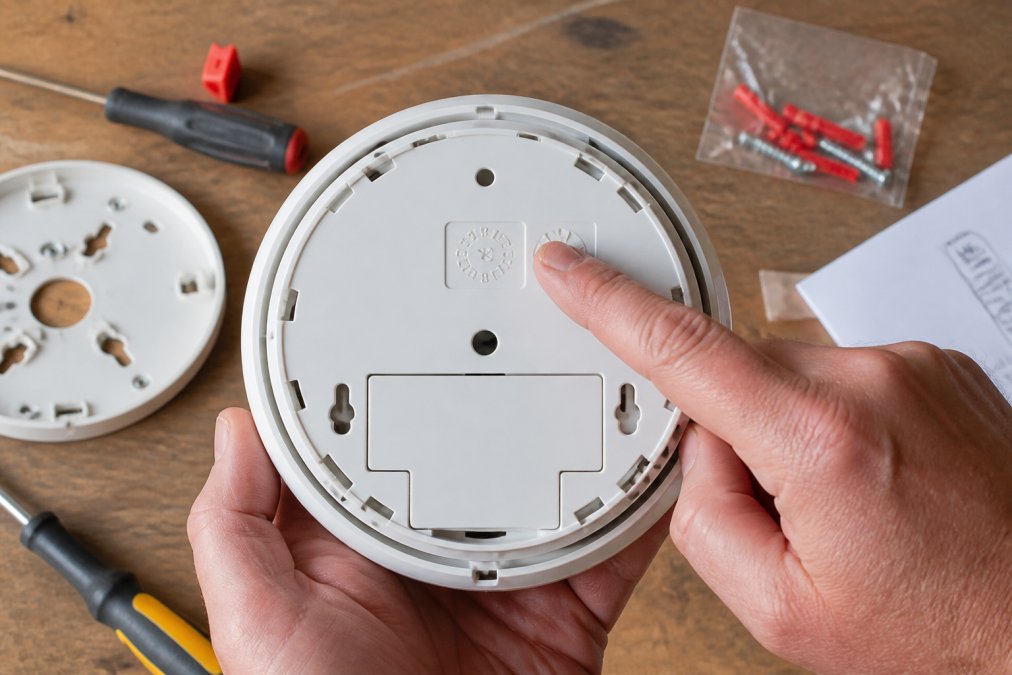
Formats vary (MM/YY, YYYY-MM, or "Manufactured" followed by the date); check the entire surface including stickers.
If the label is worn, contact the manufacturer with your model number to calculate the smoke alarm expiry date.
Check the label in good lighting. Use your phone’s camera to zoom in if the print is small, the photo often shows details your eye might miss.
Understanding the 10-Year Smoke Alarm Expiry Rule
Your smoke alarm expires exactly 10 years after manufacture under AS 3786-2014.
After 10 years, the sensor degrades and becomes unreliable at detecting smoke.
The 10-year rule applies to all smoke alarms; the countdown starts from manufacture, not installation.
Many property owners assume an alarm that passes the test button is still safe. It isn’t. A 10-year-old alarm can fail the test button and still have a faulty sensor. Replace it on schedule, not on demand.
Add 10 years to the manufacture date to find your smoke alarm expiry date.
Smoke Alarm Replacement Requirements and Testing
Test monthly, replace every 10 years. This simple rhythm keeps your home safe and keeps you compliant with building standards.
Smart elec helps select, install, and maintain compliant smoke alarms with 13+ years’ experience in the Atherton Tablelands.
Smoke alarm compliance protects your family and your investment. Checking the manufacture date takes two minutes. Knowing when to replace takes basic maths. But getting it wrong can cost you thousands in insurance disputes or fines. Contact Smart elec to audit your alarms and ensure every unit is current and correctly positioned for your home’s layout.