


Last Updated: September 25, 2026
Efficient and Reliable Energy Solutions for EV Infrastructure Deployment
EV infrastructure deployment requires proper energy solutions; poor energy planning, not chargers themselves, undermines projects and risks grid collapse under peak demand.
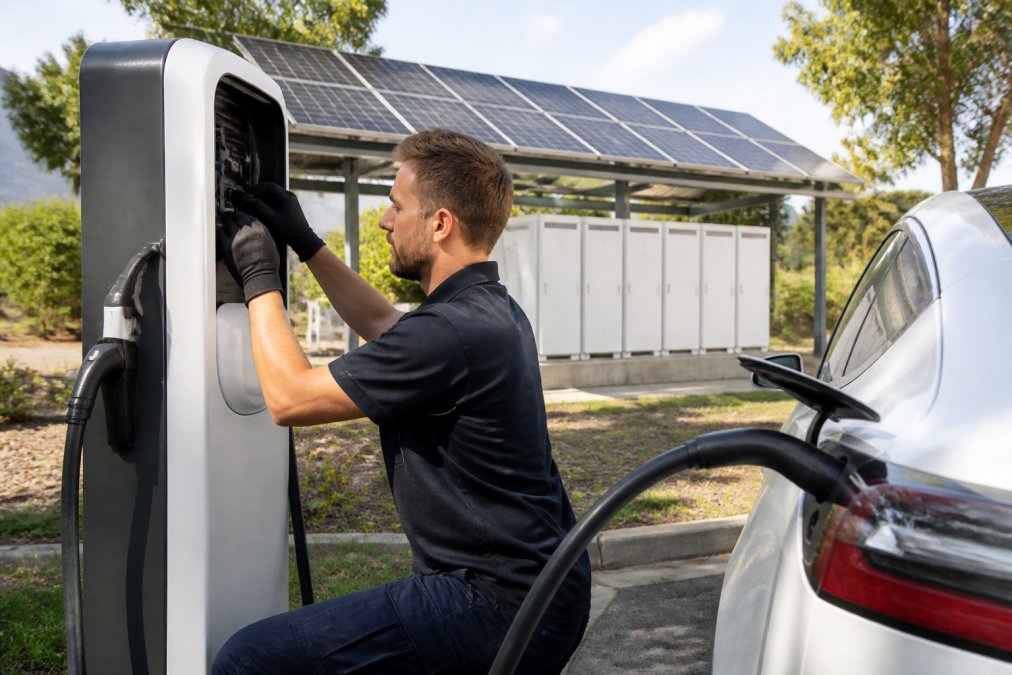
Managing EV Charger Installation Risks
Undersizing electrical supply is the most common risk; a 7 kW charger at full capacity can trigger breaker trips or equipment damage. Installations must comply with AS/NZS 3000 and AS/NZS 4777 to avoid fire hazards and grid refusal. Multiple chargers require load balancing and energy management to prevent grid strain and demand charges.
Conduct a load assessment and plan for expansion with a qualified electrician before installation.
Commercial EV Charging Load Management and Sustainability
Commercial EV infrastructure deployment differs from residential; ten fast chargers can demand 150-350 kW simultaneously. Smart charging systems stagger activation, cutting peak demand by 40-60%, while 100-150 kWh battery systems cut energy costs 20-35%. Solar panels combined with battery storage enable sustainable charging and reduce grid demand.
| Strategy | Best For | Key Benefit | Implementation Complexity |
|---|---|---|---|
| Smart load balancing | Any commercial site | Reduces peak demand 40-60% | Moderate, requires charger controller |
| Battery energy storage | High-demand sites | Cuts energy costs 20-35% | High, needs battery system design |
| Solar integration | Sites with roof/ground space | Offsets 30-70% of charging energy | High, requires solar + storage coordination |
| Time-of-use scheduling | Any site with flexible charging | Optimises off-peak charging | Low, software-only solution |
EV infrastructure deployment requires building an energy system to sustain chargers. Start with an energy audit of your current capacity and peak demand.