


Last Updated: September 23, 2026
Assess Your Electrical Load and Power Needs
List all appliances and their wattages (water pumps 1,000-2,000W, heaters 5,000-15,000W, air conditioning 3,500-5,000W), add simultaneous wattages for continuous load, then multiply by 2-3 for peak startup demands. Undersizing is the most common mistake when choosing a generator for rural properties.
Many rural properties underestimate their peak loads. Motors and pumps create surge demands that last only seconds but require a generator sized to handle them. Undersizing here is the most common mistake.
Standby vs Portable Generators for Rural Properties
Standby generators are permanently installed, activate automatically, and handle larger loads continuously. Portable generators cost less but require manual startup and suit only occasional backup needs.
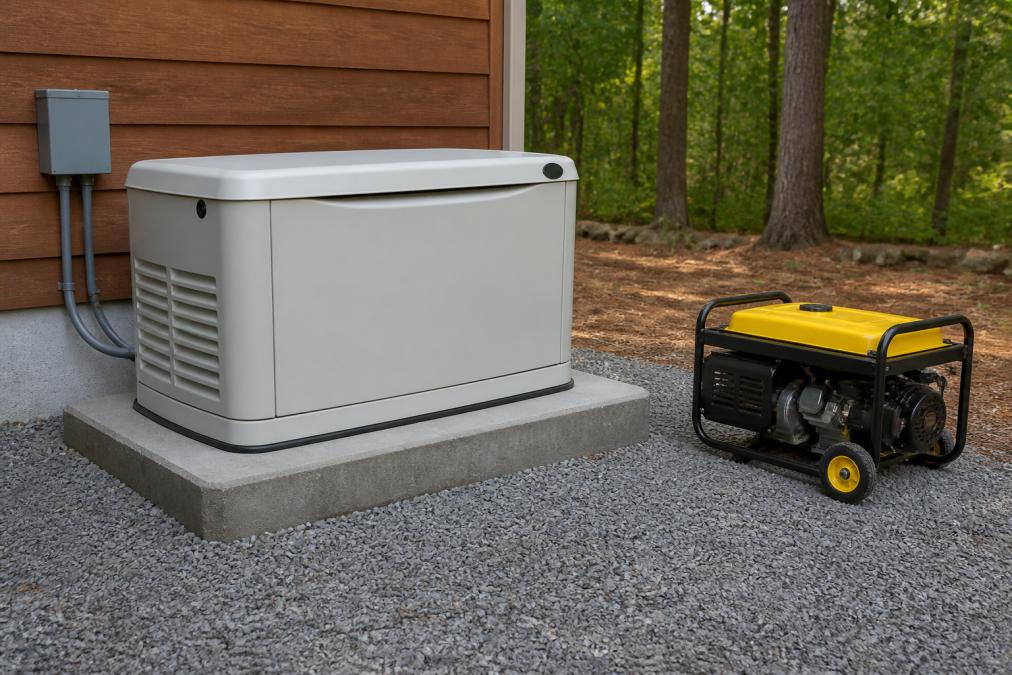
Standby generators operate quietly (70-80 dBA) with automatic activation; portable units cost less but operate louder (80-100 dBA) and need manual startup.
Generator Installation Safety Requirements and Compliance
Install generators on a level concrete pad (≥100mm thick) with 1 metre clearance on all sides, away from buildings and fuel sources. Use bunded diesel tanks and weatherproof propane storage away from ignition sources.
Carbon monoxide from generator exhaust is lethal. Never run a generator indoors, in garages, basements, or enclosed spaces. Position it outdoors with exhaust directed away from windows and air intakes. Rural properties with limited neighbours sometimes ignore this, it remains a serious hazard.
How to choose a generator for rural properties: assess electrical load, select standby or portable based on needs, and ensure professional installation. Contact us for a site visit and sizing consultation.
| Generator Type | Best For | Installation | Maintenance |
|---|---|---|---|
| Standby (diesel/propane) | Reliable backup, larger loads | Professional installation required | Annual servicing, fuel management |
| Portable (petrol/diesel) | Occasional backup, flexibility | Manual setup, minimal installation | Seasonal maintenance, fuel rotation |