


Last Updated: September 21, 2026
Why Off-Grid Power Systems Matter for Farms
Off-grid power systems for farms offer independence from grid electricity and protection against rising energy costs for rural properties with unreliable connections or high fees.
Off-grid setups ensure continuity for irrigation, grain storage, livestock management, and cold storage when grid power fails.
The real advantage is control: you manage your energy production, storage, and consumption.
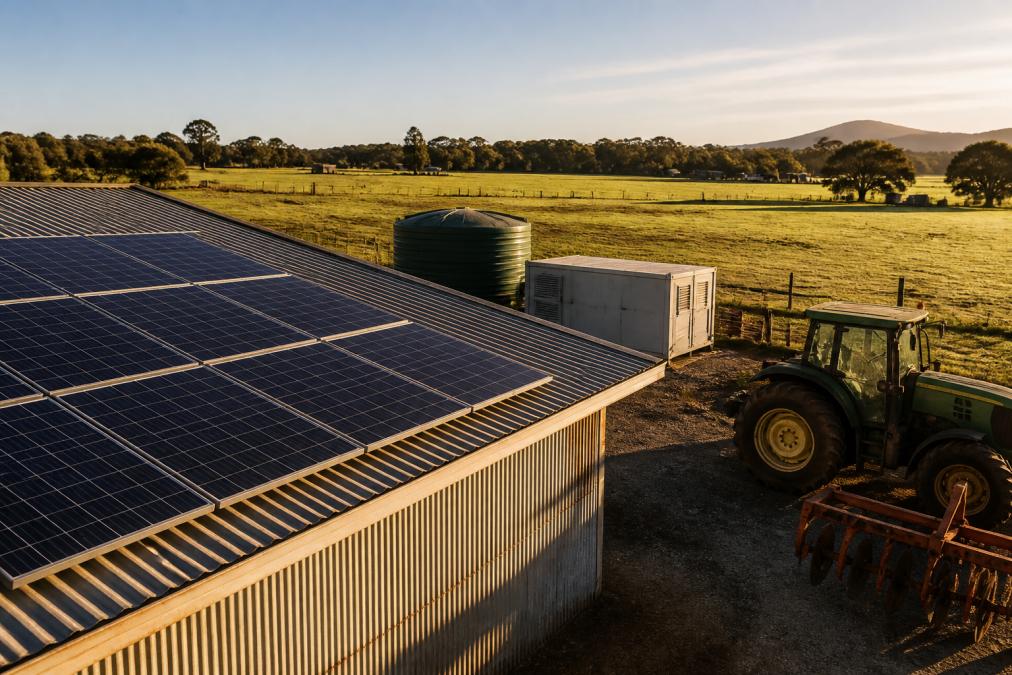
Stand-Alone Power Systems (SAPS) for Farms: Core Components and Design
Stand-alone power systems combine photovoltaic panels, battery storage, charge controllers, and inverters to convert and store solar energy.
Photovoltaic panels capture sunlight and convert it to direct current; battery storage holds energy for night and cloudy periods; a charge controller prevents overcharging; the inverter converts power to alternating current.
System sizing depends on load profile: calculate peak demand and daily consumption to size components efficiently.
Solar Power System Sizing for Rural Properties: Load Profiles and Peak Demand
Sizing off-grid power systems farms requires understanding peak demand and load profile (consumption patterns across a full day or season).
Audit every electrical load: irrigation pumps run heavily during growing season, livestock facilities need year-round power, and cold storage operates continuously, these patterns shape system design.
Peak demand determines inverter size; load profile determines battery capacity and panel output.
At Smart elec, we analyse actual farm operations and design systems matched to real-world usage, delivering reliability without unnecessary expense.
Off-grid power systems farms represent a significant investment in energy independence. Smart elec brings over 13 years of experience designing and installing reliable off-grid solutions for rural properties across the region. Contact Smart elec today for a consultation on your farm’s power requirements.