


Last Updated: September 13, 2026
How the Solar Battery Rebate Works in QLD
The solar battery rebate is a Queensland government incentive that lowers upfront battery storage costs (qld.gov.au).
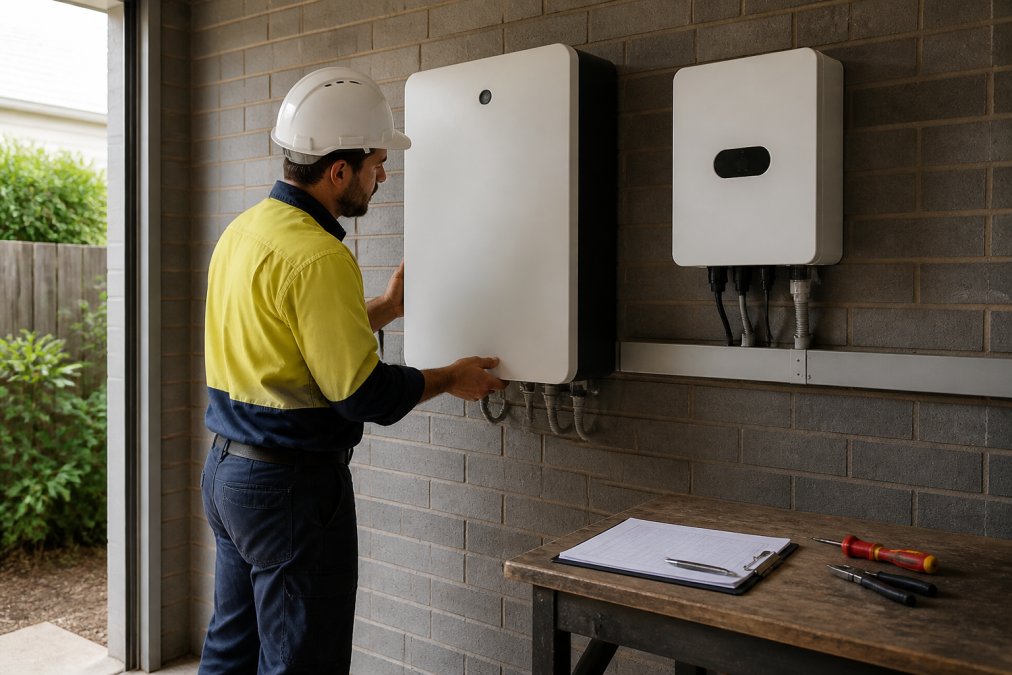
Your installer deducts the solar battery rebate from the quote and claims it back, so you pay the reduced figure upfront.
Eligibility hinges on an approved battery, a grid-connected solar system, and a qualified installer. Rules and rates change, so check the official federal battery incentive guidance before committing.
Getting a Solar Battery Cost Estimate Before You Claim
Get a solar battery cost estimate first: ask for a written breakdown separating hardware, inverter, installation labour, and the rebate deduction.
Pricing depends on capacity, chemistry, and switchboard complexity; rural properties with older infrastructure often need extra work. Smart elec tailors every quote, so get yours in writing before signing.
| What to check | Why it matters |
|---|---|
| Battery capacity | Determines how much you can store and use |
| Rebate deduction | Shows the discount applied upfront |
| Inverter compatibility | Confirms the system works with your existing setup |
How to Choose a Solar Battery and the Benefits of Home Energy Storage
Match capacity and discharge rate to your household’s power use, evening load shifting and outage backup need different systems.
Home energy storage stores excess solar by day for night use, lifting self-consumption and cutting peak-demand grid reliance; for rural properties it also buffers unreliable supply.
Focus on usable kilowatt-hour capacity, discharge rate against peak load, inverter compatibility, lifespan, warranty, and VPP compatibility.
A VPP networks your battery with others, and some providers pay for energy contributed during peak events, changing the long-term return (aemo.com.au).
Understanding the Rebate, STCs, and What Comes Next
Small-scale Technology Certificates (STCs) are a separate federal mechanism lowering the cost of eligible solar and battery installations based on expected output. Both can apply.
Post-installation, track self-consumption, feed-in tariff credits, and peak-demand grid draw to see whether the battery pays for itself.
For businesses, discuss tax implications like depreciation with an accountant. Confirm switchboard capacity and inverter pairing before installation, not after.
The gap between a battery that performs and one that disappoints usually comes down to sizing and installation quality. Smart elec brings over 13 years of experience across residential, rural, and commercial properties, with honest system sizing and workmanship backed by an award-winning team. Get started with Smart elec and install a storage system built to actually deliver.