


Last Updated: September 6, 2026
Your solar array is one of the most expensive systems on your property, yet many homeowners treat it as a set-and-forget investment. A photovoltaic system needs a planned health routine to protect its energy yield and warranty.
Why Solar Power Maintenance Matters for Your System
Solar power maintenance is the routine care and inspection of your photovoltaic system, including panels, inverter, and cabling, to sustain peak efficiency and prevent premature failure. A common mistake is assuming rain cleans the array; in dry seasons, soiling loss builds up quickly and silently.
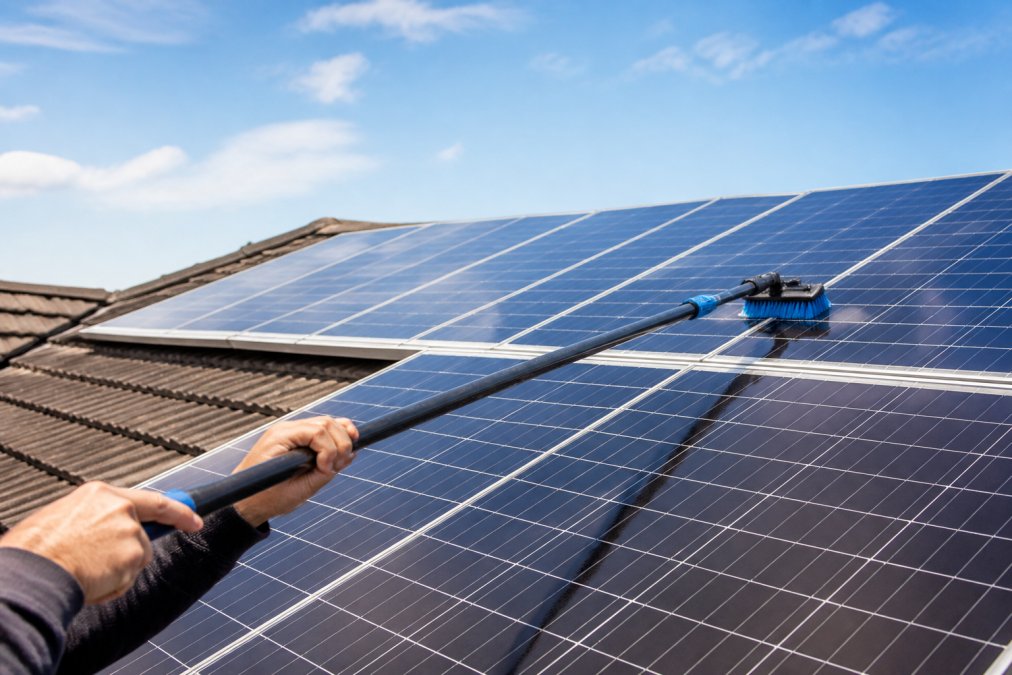
Maintenance catches small issues, such as micro-cracks or voltage drops, before they become system faults. This means monitoring app data, not just panel surfaces.
Solar Panel Cleaning Frequency: A Simple Schedule
Most Australian systems benefit from cleaning two to four times per year, depending on your local environment (cleanenergyregulator.gov.au). Homes near farmland, busy roads, or with significant tree cover need cleaning more often. The goal is to prevent debris from shading individual cells, which forces the whole string to underperform.
- Early morning or late afternoon: Clean when panels are cool to avoid thermal shock and water spotting.
- Use detergent-free water: Plain water with a soft brush protects the glass and seals.
- Check the monitoring portal: A sudden drop in output often signals dirt before you notice it visually.
Hard water leaves mineral deposits that attract dust. If you must use a hose, use gentle water pressure and avoid harsh chemicals.
Always check the manufacturer’s warranty terms before cleaning. Some warranties require professional servicing to remain valid, and using the wrong cleaning agent can void your coverage.
Your Solar Inverter Troubleshooting Guide
The inverter is the component most likely to fail (energy.gov). When your monitoring app shows a system fault or zero generation, the inverter is the first place to look. Many faults are simple, such as a tripped isolator switch or a blown DC fuse.
Safety first: Solar panels generate DC voltage whenever light hits them. Never open the inverter cover or touch electrical components unless you have isolated the system and confirmed the DC isolator is off.
Check the inverter display for error codes and compare them against the manual. Restart the unit by switching it off, waiting five minutes, and switching it back on. If the error persists, check the AC side: is the isolator switch on and is there power at the outlet?
A recurring error code is a sign of a deeper issue, not a glitch. Ignoring repeated faults can lead to voltage drops across the array and permanent damage to the inverter’s internal components.
If the inverter is hot to the touch, shows burn marks, or the error code references internal components, stop troubleshooting. A licenced electrician is required to work on the electrical components of your system (worksafe.qld.gov.au). DIY repairs risk injury and can void your warranty.
| Maintenance Task | Recommended Frequency | DIY or Professional |
|---|---|---|
| Visual panel inspection | Monthly | DIY |
| Panel cleaning | 2-4 times yearly | DIY or Professional |
| Inverter error check | Monthly via app | DIY |
| Cable and isolator inspection | Annually | Professional |
| Full system health check | Every 2 years | Professional |
Cleaning panels and reading the monitoring app are safe DIY tasks. Anything involving the inverter cover, isolator switches, or cabling integrity requires a qualified electrician. Professional inspection cost is small against the cost of a failed inverter or roof fire.
Before the wet season, check that all roof penetrations and cable glands are sealed. After high winds, inspect for lifted panels or debris impacts.
Most modern inverters connect to a monitoring portal that tracks daily production. Learn to read the baseline data for a clear day in each season. If production falls consistently below that baseline, you have a performance issue that warrants investigation.
:::takeaway
A well-maintained solar system is a combination of regular cleaning, smart monitoring, and knowing when to call in a licenced professional. Protect your panels, respect the inverter, and your system will deliver reliable energy for decades.
Keeping your solar array at peak efficiency is an ongoing responsibility. Smart elec offers comprehensive solar maintenance and inspection services, backed by an award-winning team with over 13 years of experience. Contact Smart elec to schedule your next system inspection.